At the time, I was not disciplined.
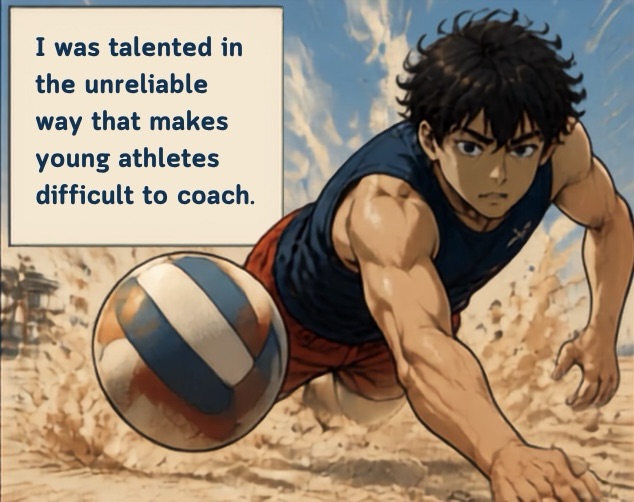
I could make spectacular defensive plays and then miss three ordinary serves.
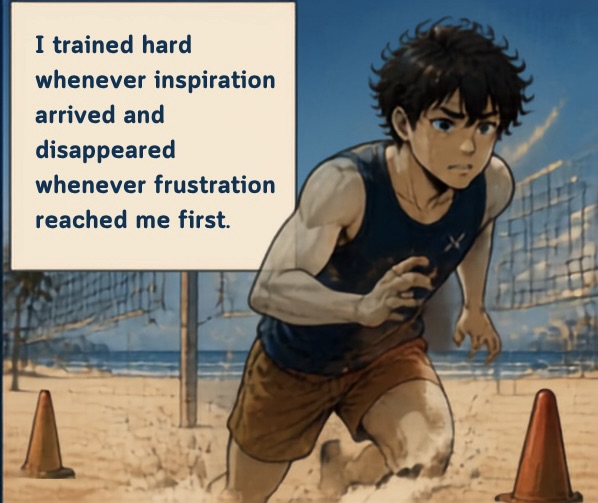
I loved competition, photographs, recognition, and the way people gathered near a court when a match became interesting.
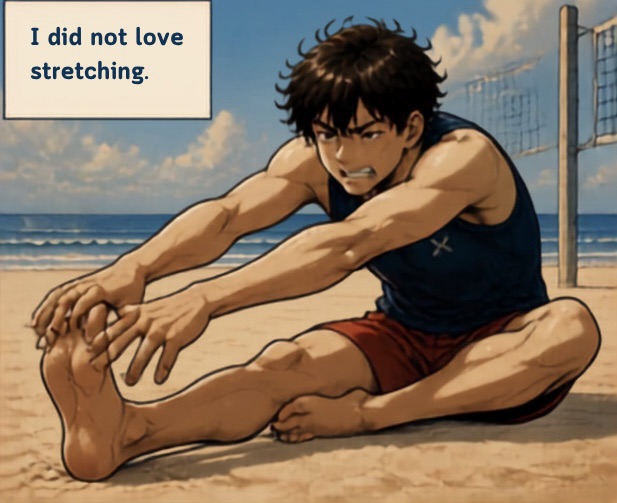
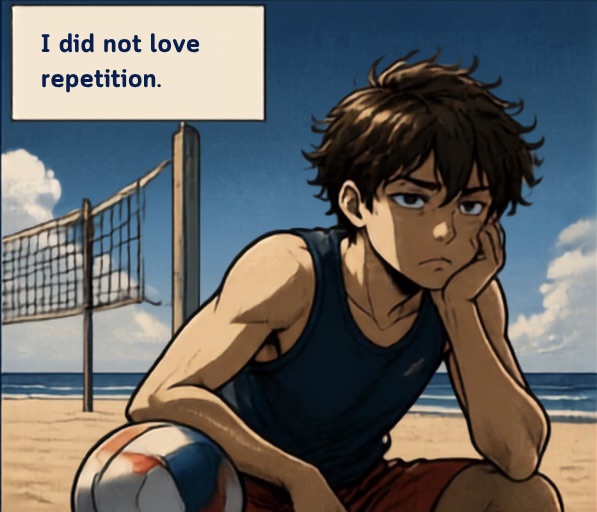
I did not love arriving before sunrise to practice passing when no one was there to admire it.
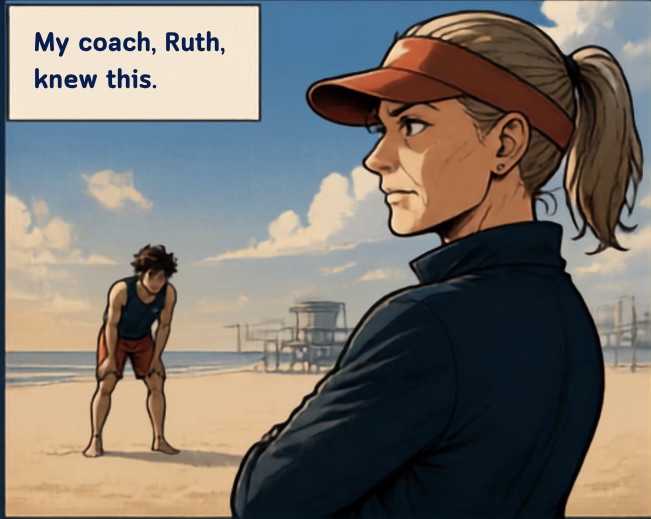
The professional game was growing, tours were becoming more organized, and athletes were beginning to imagine careers beyond local tournaments. I talked about all of it constantly.
“One day I’m playing the Manhattan final,” I said after practice.
Ruth rolled a boundary line into a perfect circle.

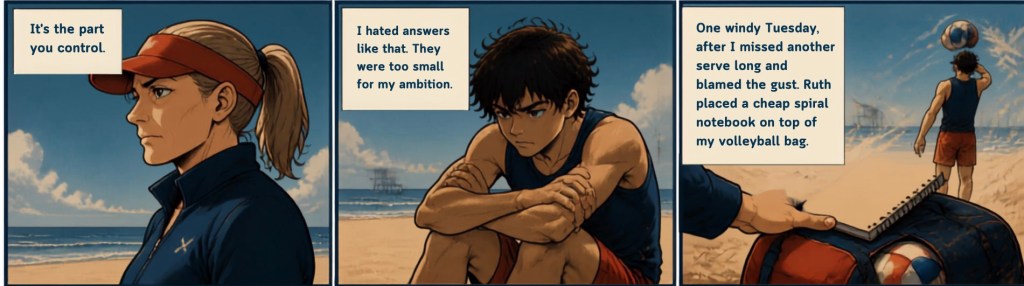

“It cost ninety-nine cents.”
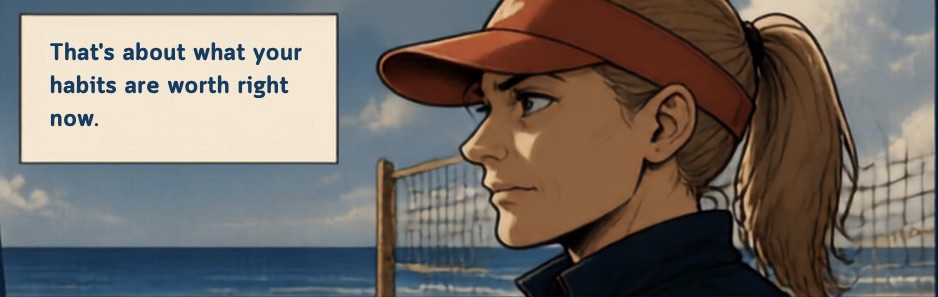
Ruth walked toward the parking lot before I could respond.
No explanation.
That was Ruth’s style.
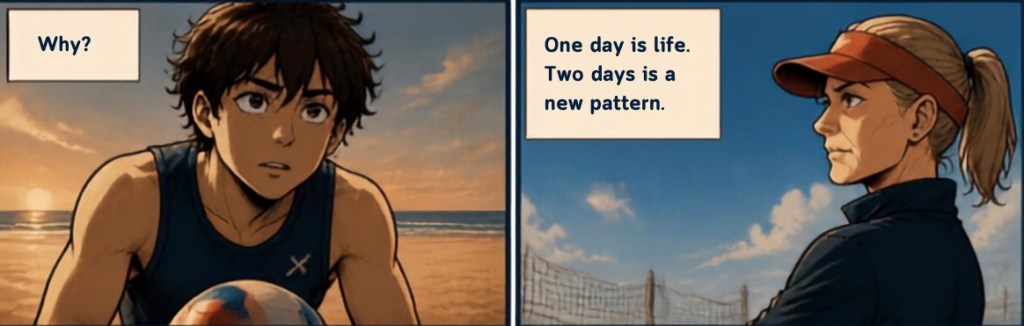
“Never miss twice,” Ruth said when I admitted skipping two mornings.
I began keeping the notebook on top of my shoes at night so I could not dress without touching it.

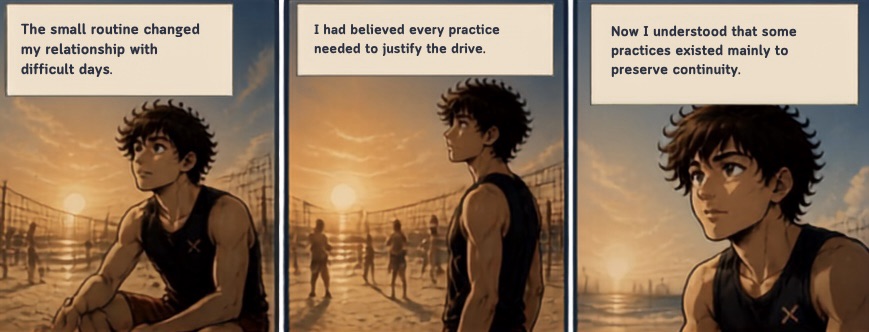
My mornings became easier not because my motivation improved, but because fewer decisions remained.


Not because I believed it harder.
Because I collected evidence.
The ritual did not remove conflict.
It kept conflict from expanding before we chose what it meant.
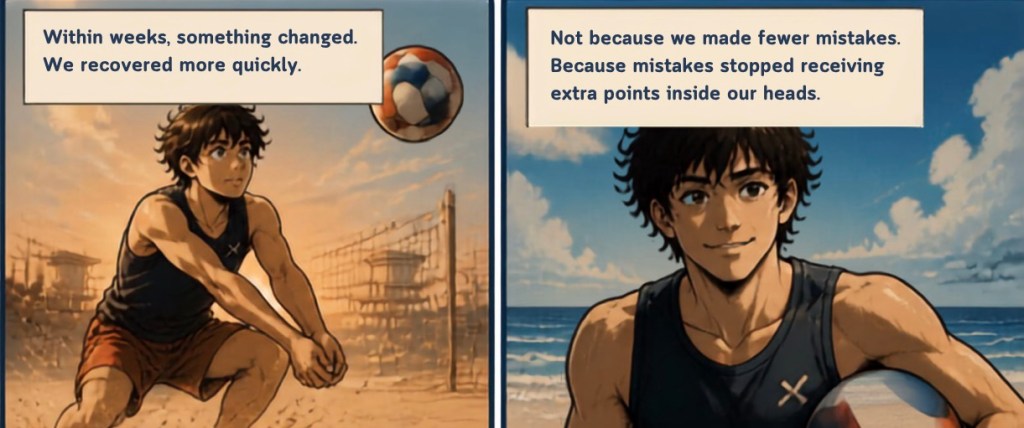

Normally, I would have skipped the beach completely.
Instead, I drove down, put on my shoes, touched the sand, and passed five balls against the side of an empty lifeguard tower.
Five became twenty.
Twenty became serving.
I practiced for fourteen minutes.

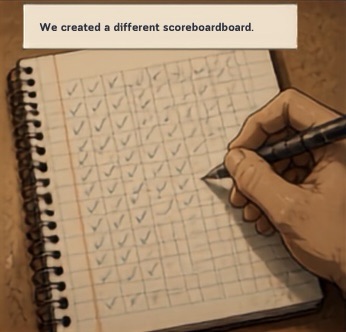
After each tournament, I rated only behaviors:
Did I complete my serving routine?
Did I communicate after mistakes?
Did I drink water before feeling thirsty?
Did I watch the wind before warm-up?
Did I recover before the next match?
Did I help pack equipment before leaving?
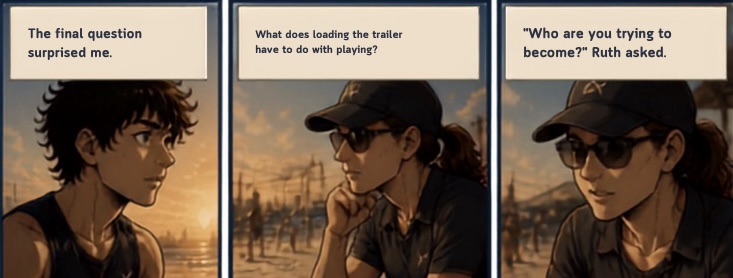
“A professional.”
“That’s a result.”
Ruth tapped the notebook.
“Who?”
I wrote:
A dependable athlete who improves the court and the people around it.
That identity was larger than winning.


Leave a Reply