Transcript:
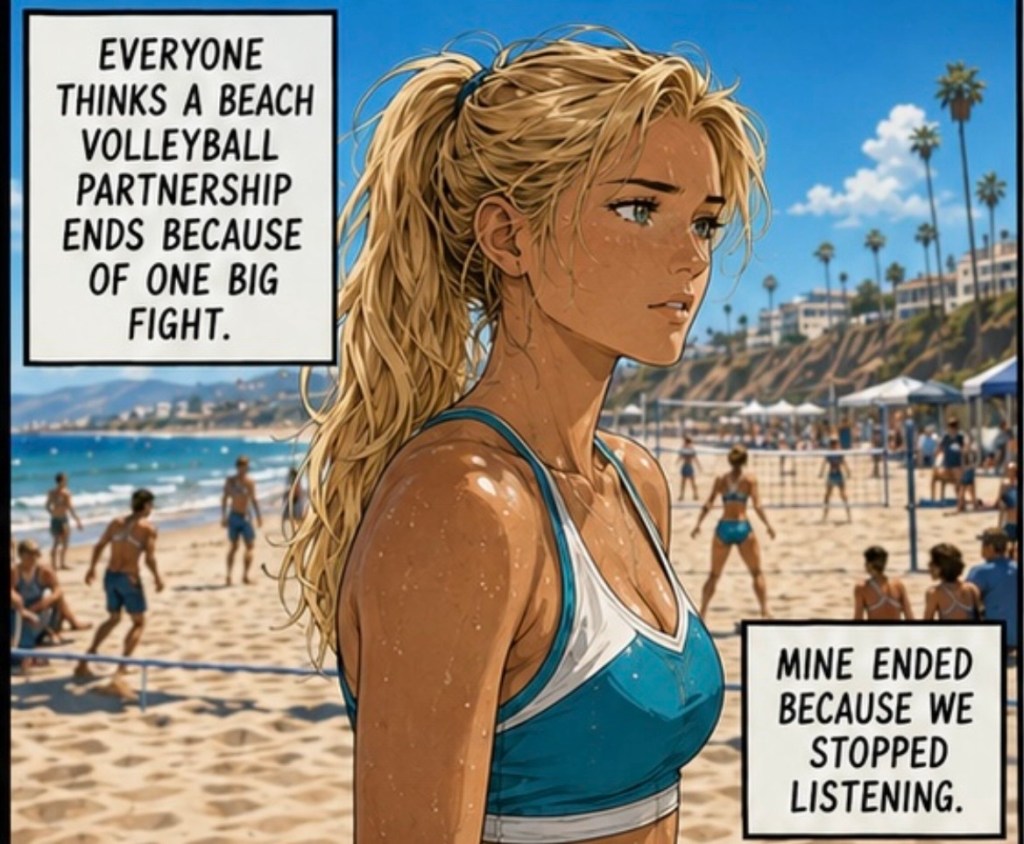
Everyone thinks a beach volleyball partnership ends because of one big fight.
Mine ended because we stopped listening.
By the summer of 1998, Brooke and I had spent nearly four years together on the California beach circuit. We’d graduated from tiny local tournaments that hardly pay for dinner to playing against women we’d once asked for autographs. People called us one of the toughest defensive teams on the sand.
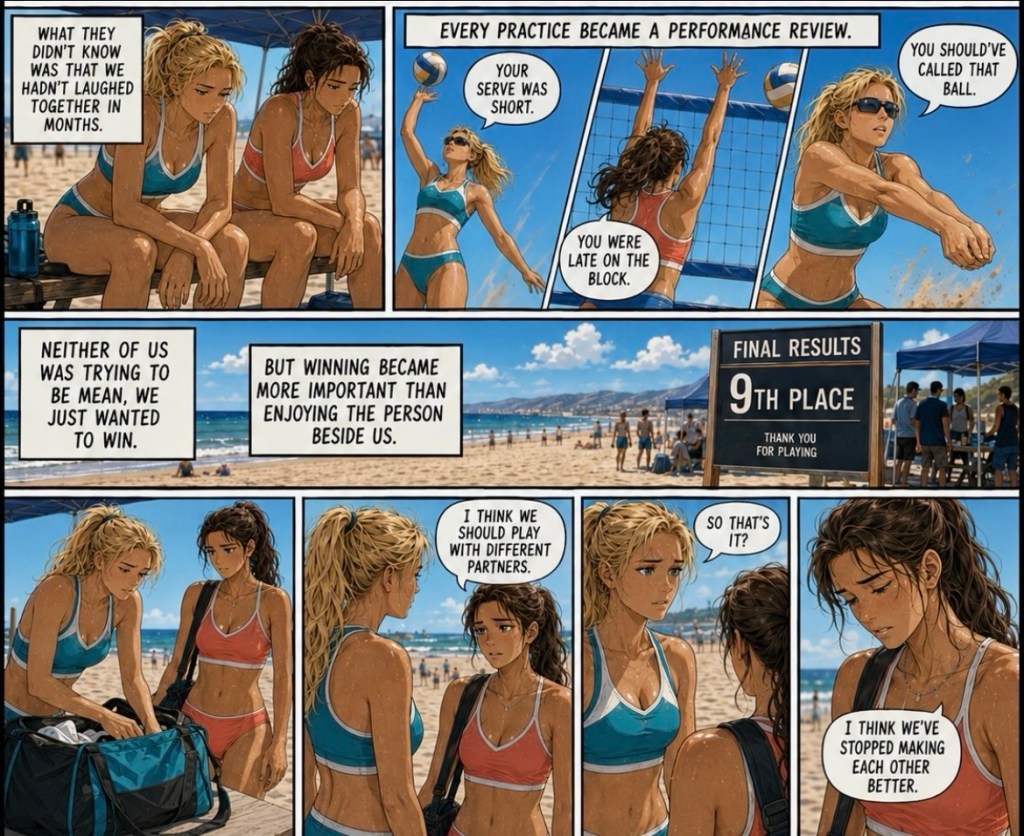
What they didn’t know was that we hadn’t laughed together in months.
Every practice became a performance review.
“Your serve was short.”
“You were late closing the block.”
“You should’ve called that ball.”
Neither of us was trying to be mean.
We just wanted to win.
Somewhere along the way, winning became more important than enjoying the person standing beside us.
The breaking point came after a disappointing ninth-place finish.
I was stuffing towels into my beach bag when Brooke walked over.
“I think we should play with different partners.”
She said it quietly, almost kindly.
Somehow that made it hurt more.
I wanted her to yell.
I wanted her to blame me.
Instead, she simply looked exhausted.
“So that’s it?” I asked.
“I think we’ve stopped making each other better.”
Those words echoed in my head for weeks.
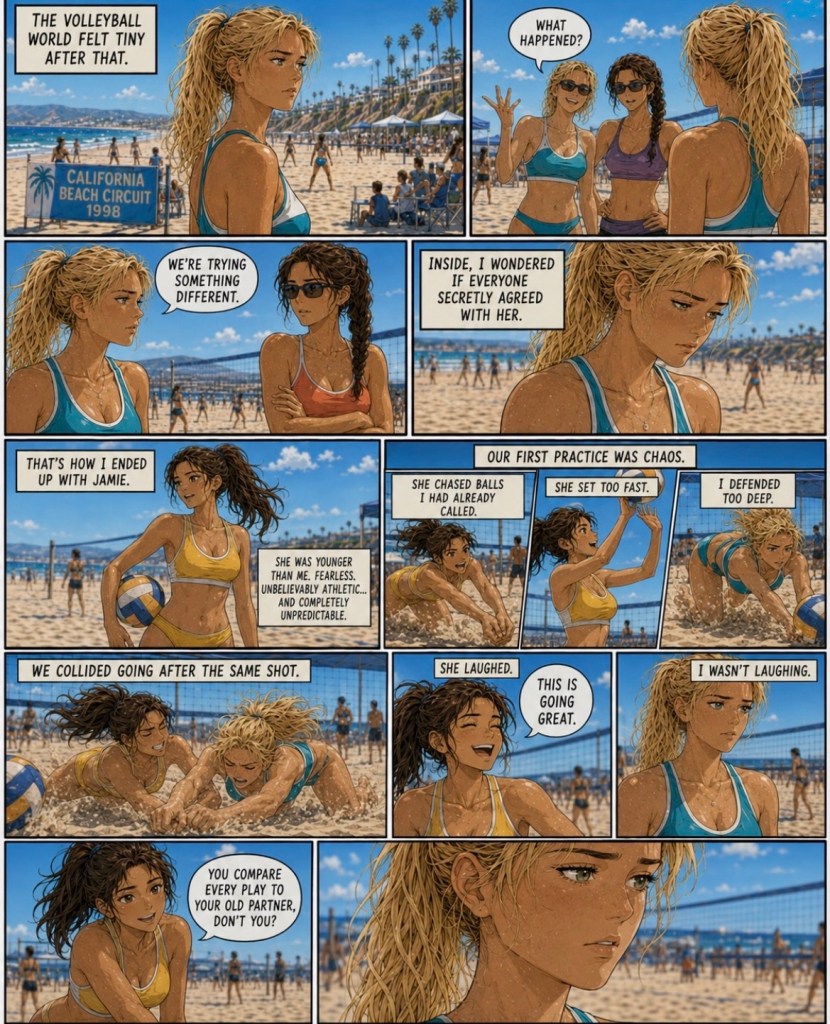
The volleyball world felt tiny after that. Every tournament I attended, someone asked the same question.
“What happened?”
Nobody wanted the real answer.
They wanted gossip.
Instead, I smiled and said, “We’re trying something different.”
Inside, I wondered if everyone secretly agreed with her.
Finding a new partner wasn’t easy.
Most experienced players already had teammates.
Others didn’t want to risk partnering with someone who had just been left behind.
That’s how I ended up with Jamie.
She was younger than me, fearless, unbelievably athletic…and completely unpredictable.
During our first practice, she chased balls I had already called.
She set too fast.
I defended too deep.
We actually collided going after the same shot.
She laughed while I rubbed my shoulder.
“This is going great,” she joked.
I wasn’t laughing.
Everything she did felt wrong.
Not because it actually was.
But because it wasn’t what Brooke would’ve done.
Jamie noticed before I did.
“You compare every play to your old partner, don’t you?”
I couldn’t answer.
Because she was right.
I wasn’t giving Jamie a chance to become my teammate.
I was asking her to become Brooke.
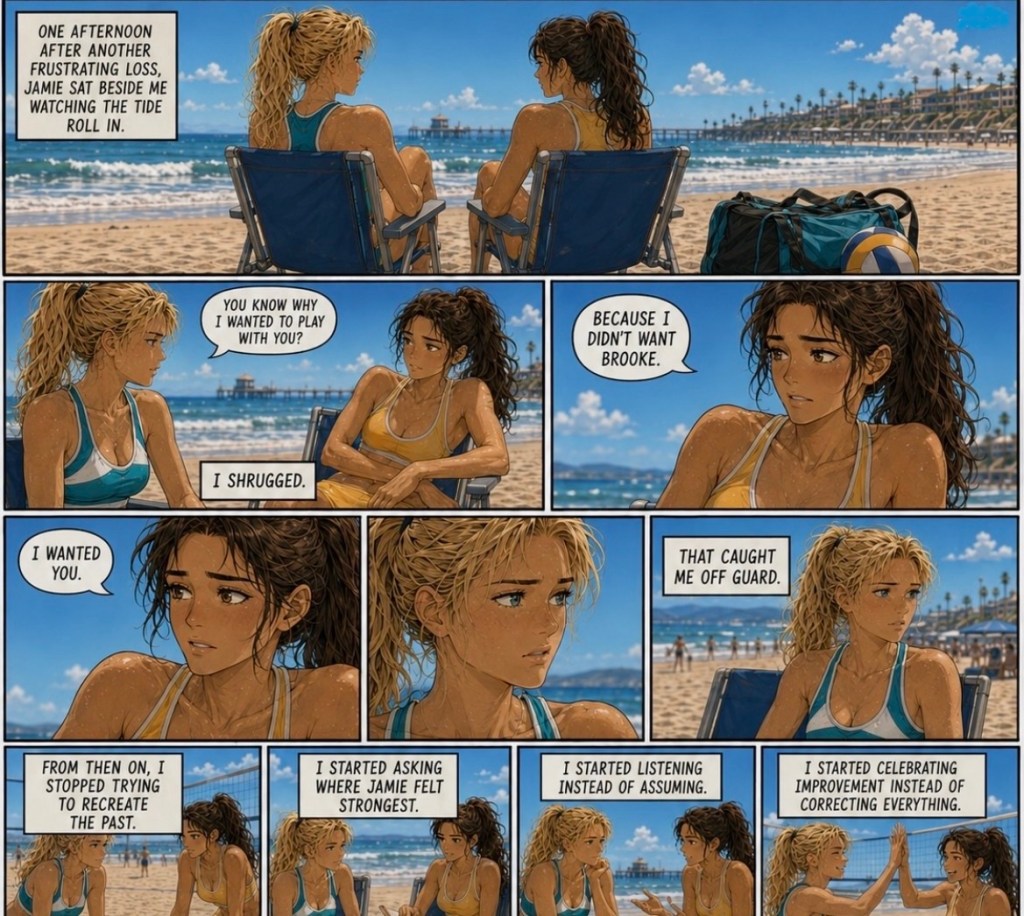
One afternoon after another frustrating loss, Jamie sat beside me watching the tide roll in.
“You know why I wanted to play with you?” she asked.
I shrugged.
“Because I didn’t want Brooke.”
That caught me off guard.
“I wanted you.”
Nobody had said that to me in months.
From then on, I stopped trying to recreate the past.
Instead of telling Jamie where Brooke would’ve stood, I started asking where Jamie felt strongest.
Instead of assuming, I listened.
Instead of correcting every mistake, I celebrated every improvement.
Slowly, we became our own team.
Not better.
Not worse.
Different.
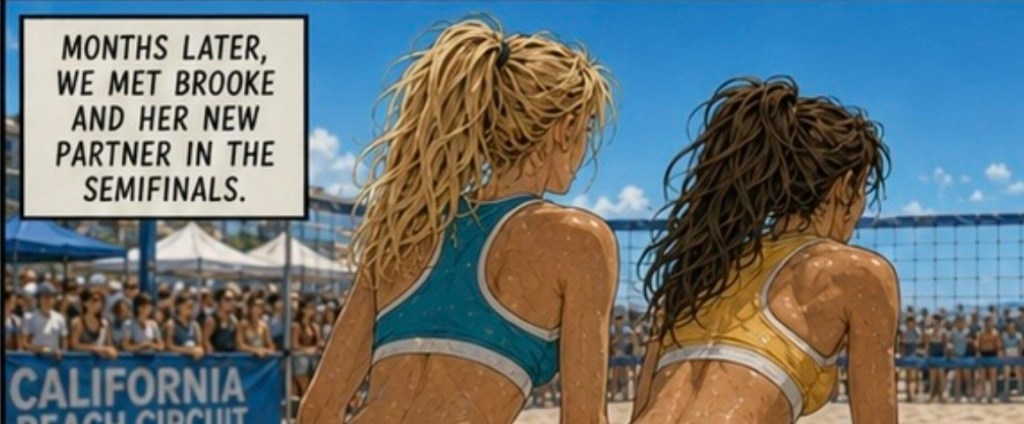
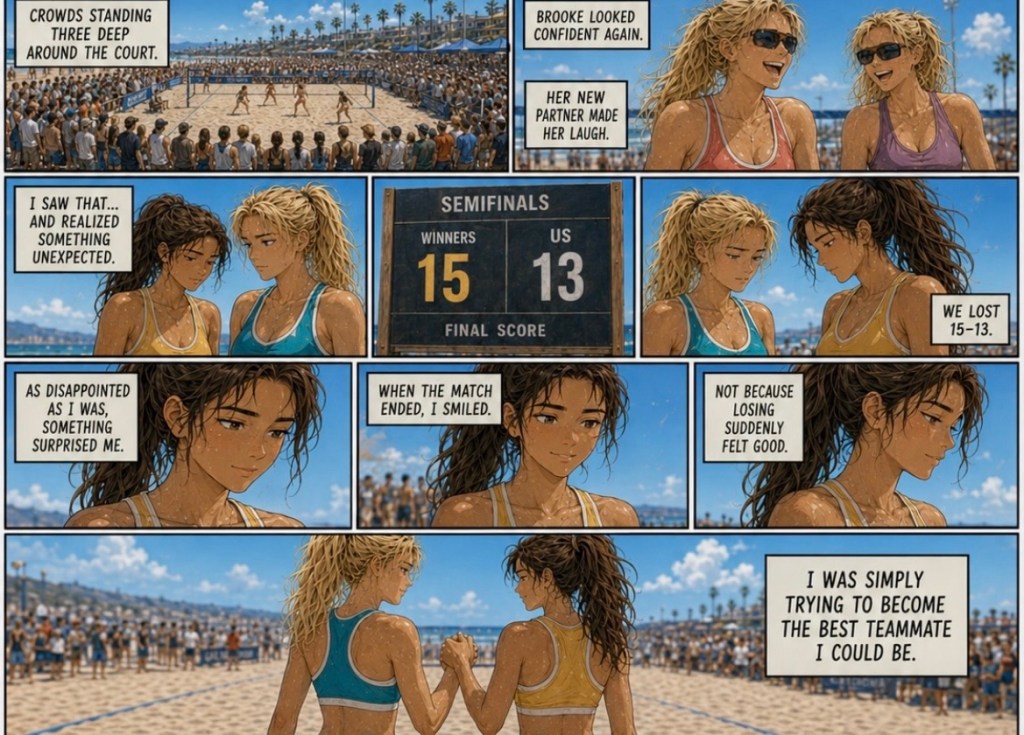
Months later, we met Brooke and her new partner in the semifinals.
The match was incredible.
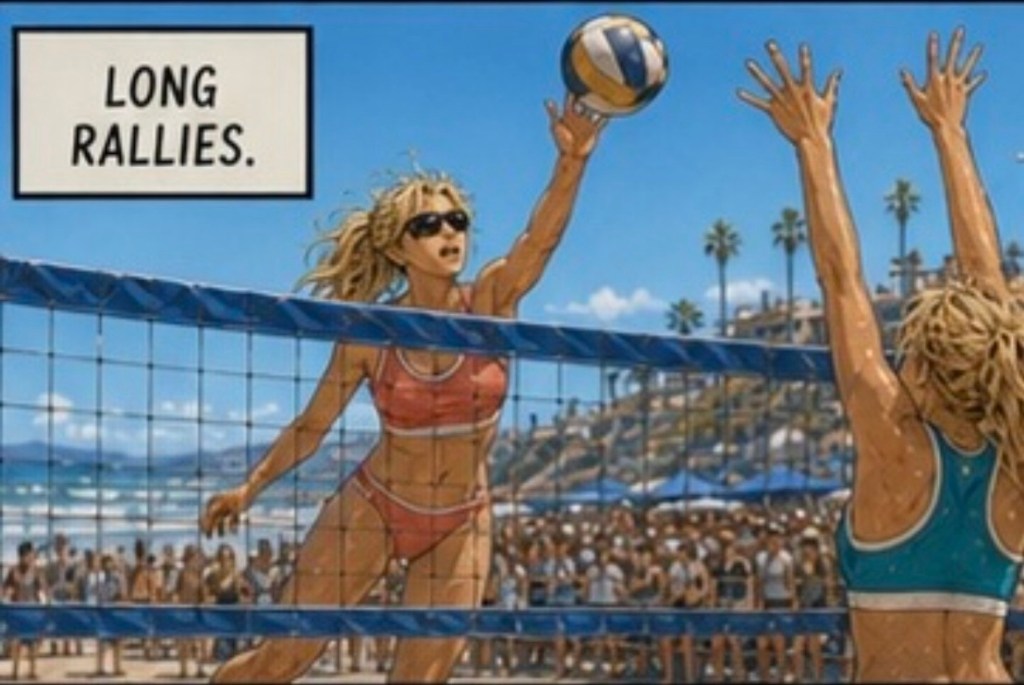
Long rallies.
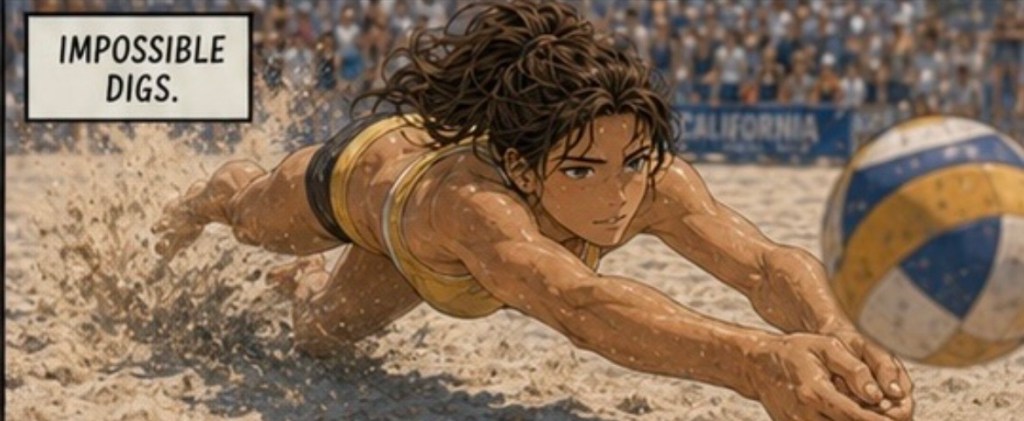
Impossible digs.
Crowds standing three deep around the court.
We lost 15-13.
As disappointed as I was, something surprised me.
When the match ended, I smiled.
Not because losing suddenly felt good.
Because I finally realized I wasn’t trying to prove Brooke wrong anymore.
I was simply trying to become the best teammate I could be.
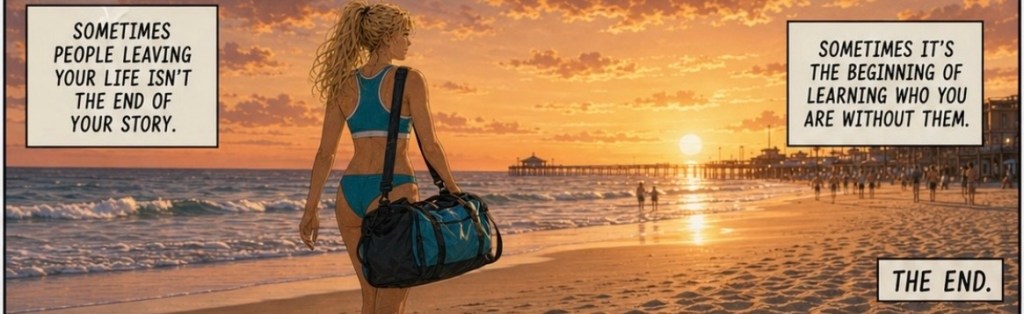
Sometimes people leaving your life isn’t the end of your story.
Sometimes it’s the beginning of learning who you are without them.


Leave a Reply